



What is....Hot Melt Adhesive?


724
Hot Melt Glue, also known as Hot Melt Adhesive (HMA), is a thermoplastic adhesive applied in a molten state that forms a strong bond as it cools and solidifies. It is widely used in packaging, carton sealing, product assembly, woodworking, and manufacturing because it sets quickly, adheres strongly, and is easy to apply.
Unlike water-based adhesives or solvent-based glues, hot melt glue doesn't require drying or evaporation to form a bond. Instead, it is heated until it melts, applied to a surface and allowed to cool, forming a secure bond between materials.
How Does Hot Melt Glue Work?
Hot melt glue typically comes as glue sticks, slugs, pellets, granules, or blocks, depending on the equipment used.
The bonding process involves four main steps:
-
Heating: Heat the adhesive with a hot melt glue gun or industrial glue applicator until it reaches the recommended application temperature.
-
Application: Apply the molten adhesive to one of the surfaces being bonded.
-
Bonding: Bring the second surface into contact with the adhesive while it is still tacky.
-
Cooling: As the adhesive cools and solidifies, it forms a strong bond that holds the materials together.
Hot melt glue is popular in high-speed packaging applications because it sets within seconds, improving production efficiency.
What is Hot Melt Glue Used For?
Hot melt adhesives are commonly used across a range of packaging and industrial applications, including:
-
Carton and box sealing: Securing the flaps of corrugated cardboard cartons and packaging boxes.
-
Product packaging: Assembling cardboard displays, retail packaging, trays and folding cartons.
-
Industrial manufacturing: Bonding plastics, fabrics, foam and other compatible materials.
-
Woodworking and furniture: Edge banding, product assembly and component bonding.
-
Craft and general assembly: Attaching decorative materials, paper, cardboard and lightweight components.
-
Protective packaging: Securing packaging components and inserts during assembly.
What Are the Advantages of Hot Melt Glue?
Hot melt glue offers several benefits compared with other adhesive systems.
Fast setting time: Hot melt adhesives cool and set quickly, making them suitable for high-speed packaging and production lines.
Strong adhesion: The correct hot melt formulation provides reliable bonding to materials such as cardboard, paper, wood, fabrics and certain plastics.
No drying time: Because hot melt glue sets by cooling rather than solvent or water evaporation, you can often handle bonded products shortly after application.
Versatile application: Hot melt adhesives can be applied using manual glue guns, pneumatic applicators or automated industrial glue systems.
Clean and efficient: Hot melt adhesives typically contain no water or solvent carrier, reducing drying time and minimising waste when applied correctly.
Are There Different Types of Hot Melt Glue?
Yes. Hot melt adhesives come in different formulations designed for specific materials, application temperatures, and bonding requirements.
|
Type of Hot Melt Adhesive |
Common Applications |
|---|---|
|
EVA (Ethylene Vinyl Acetate) |
Carton sealing, packaging and general assembly |
|
Polyolefin Hot Melt |
Packaging, product assembly and selected plastic bonding |
|
Polyamide Hot Melt |
Industrial assembly and applications requiring higher heat resistance |
|
PUR (Polyurethane Reactive Hot Melt) |
Woodworking, furniture manufacturing and demanding assembly applications |
|
Pressure Sensitive Hot Melt |
Labels, tapes and self-adhesive products |
The choice of hot melt glue depends on the materials being bonded, required bond strength, application temperature, open time and operating conditions.
What is the Difference Between Hot Melt Glue and Conventional Glue?
The main difference is how the adhesives form a bond.
Traditional water-based and solvent-based adhesives generally require the liquid to evaporate or be absorbed into the material before the bond develops. Hot melt glue, by contrast, is applied hot and sets as it cools.
This makes hot melt glue particularly suitable for automated carton sealing and packaging assembly, where rapid bonding is important.
However, standard hot melt adhesives can soften at elevated temperatures. Specialised formulations may be required for products exposed to heat, cold storage or challenging environmental conditions.
What Equipment is Used to Apply Hot Melt Glue?
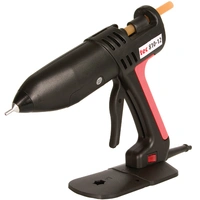
You can apply hot melt adhesives with several types of equipment, including manual hot melt glue guns, industrial glue guns, bulk adhesive melters, and automated dispensing systems.
For smaller applications, people commonly use handheld hot melt glue guns with glue sticks. Larger packaging operations may use industrial hot melt systems that automatically apply adhesive to cartons, trays or other packaging materials.
Selecting the right glue and application equipment is key to consistent bonding performance.
Hot Melt Glue and Glue Guns from Get Packed
Get Packed supplies a range of Hot Melt Glues and Adhesives, including glue sticks, slugs and pellets for packaging, carton sealing and industrial applications.
We also offer Hot Glue Guns and Industrial Glue Applicators suitable for light-duty applications through to heavy-duty industrial use, including cordless, pneumatic and adjustable-temperature models.
Choosing the correct combination of adhesive and glue gun helps ensure a reliable bond, consistent application and efficient production.
