





What is Anti-Static Packaging?

712
Anti-static packaging is a specialised type of protective packaging designed to prevent the build-up of static electricity and help protect sensitive electronic components and equipment from electrostatic discharge (ESD).
Electrostatic discharge occurs when static electricity suddenly transfers between objects with different electrical charges. Even a small discharge, which may not be noticeable to humans, can damage sensitive electronic components such as circuit boards, microchips and computer equipment.
Anti-static packaging helps reduce this risk during storage, handling and transportation.
Types of Anti-Static Packaging
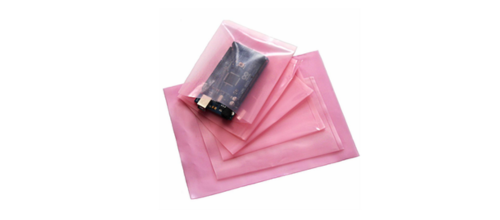
1. Anti-Static Bags
Typically pink polyethylene bags designed to minimise the generation of static electricity. Commonly used for non-sensitive components or as part of an ESD-controlled environment. They do not generally provide shielding against external electrostatic discharge.

2. Static Shielding Bags
Usually silver or metallic-looking bags that help protect sensitive electronic components from external electrostatic discharge. Commonly used for circuit boards, computer parts and electronic assemblies.

3. Anti-Static Bubble Wrap
Specially treated bubble wrap that provides cushioning while reducing static generation. Used for protecting electronic equipment from bumps, vibrations and static build-up during transport.
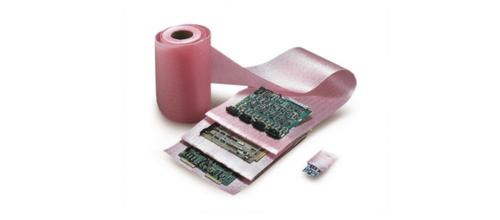
4. Anti-Static Foam
Specially manufactured foam that provides cushioning and helps control static electricity. Some conductive foam products are also designed for safely holding electronic component pins.
Benefits of Anti-Static Packaging
- Protects Sensitive Electronics: Reduces the risk of damage caused by static electricity.
- Prevents Static Build-Up: Minimises the generation and accumulation of electrostatic charges.
- Reduces Product Damage: Helps prevent electronic component failure during handling, storage and transportation.
- Provides Physical Protection: Certain anti-static packaging products also offer cushioning against shocks, vibrations and impacts.
- Improves Product Reliability: Helps maintain the performance and reliability of sensitive electronic equipment.
Common Applications
Anti-static packaging is widely used in industries such as electronics manufacturing, computer hardware, telecommunications, medical equipment, aerospace and automotive electronics.
Typical products requiring anti-static or ESD-protective packaging include printed circuit boards (PCBs), semiconductors, microchips, memory modules, electronic sensors and other sensitive electronic assemblies.
What is the Difference Between Anti-Static and Static Shielding Packaging?
Although the terms are sometimes used interchangeably, there is an important difference.
|
Feature |
Anti-Static Packaging |
Static Shielding Packaging |
|
Main Purpose |
Reduces static generation |
Protects against external ESD |
|
Common Colour |
Pink |
Silver or metallic |
|
Static Generation Control |
Yes |
Generally yes |
|
ESD Shielding |
Generally no |
Yes |
|
Typical Applications |
General ESD-safe handling |
Sensitive electronic components |
Summary
Anti-static packaging is designed to minimise static electricity and help protect electronic products during handling, storage and transportation. It is available in various forms, including bags, bubble wrap, foam and protective films.
For highly sensitive electronic components, static shielding packaging is generally recommended because it provides an additional level of protection against electrostatic discharge.
