



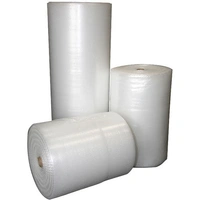
What is Pallet Wrap?

567
Pallet wrap is manufactured using two main processes: Blown Film Extrusion and Cast Film Extrusion. Although both are used to secure palletised loads, they have different characteristics and performance benefits.
Blown Pallet Wrap
Blown pallet wrap is manufactured by extruding molten plastic into a tube, which is inflated with air and cooled to form a strong, flexible film.
Blown pallet wrap generally offers higher puncture and tear resistance, making it particularly suitable for irregularly shaped loads, sharp corners and heavier products. It also has a higher natural cling and tends to be noisier when unwound.
Cast Pallet Wrap
Cast pallet wrap is manufactured by extruding molten plastic through a flat die onto chilled rollers, producing a smooth, consistent film.
Cast pallet wrap offers excellent clarity, quiet unwinding and consistent thickness. It is generally easier to stretch and apply, making it a popular choice for everyday pallet wrapping applications, particularly where products are regularly shaped.
Blown vs Cast Pallet Wrap Comparison
| Feature | Blown Pallet Wrap | Cast Pallet Wrap |
|---|---|---|
| Manufacturing Process | Extruded into an air-inflated tube | Extruded through a flat die onto chilled rollers |
| Film Clarity | Slightly cloudy | Excellent clarity |
| Puncture Resistance | Generally higher | Good, but generally lower |
| Tear Resistance | Generally higher | Good |
| Stretch Characteristics | Typically requires more force to stretch | Generally easier to stretch |
| Noise Level | Noisier when unwinding | Quiet unwinding |
| Cling Properties | Strong natural cling | Consistent, controlled cling |
| Load Suitability | Heavy, irregular or sharp-edged loads | Regular, uniform pallet loads |
| Cost | Generally more expensive | Generally more economical |
| Best Applications | Heavy-duty and demanding pallet wrapping | General-purpose pallet wrapping |
Performance can vary depending on film formulation, thickness and manufacturer.
Benefits of Pallet Wrap
- Load Stability: Secures cartons and products to minimise movement during storage and transportation.
- Product Protection: Helps protect goods from dust, dirt and moisture.
- Reduced Damage: Helps prevent palletised products from shifting, toppling or becoming damaged.
- Cost-Effective: Provides an economical method of securing pallet loads.
- Versatility: Available in different widths, thicknesses, colours and formulations for manual and machine applications.
Choosing the right pallet wrap depends on the weight, shape and stability of the palletised load, as well as whether the film is being applied manually or by a pallet wrapping machine.
For most general-purpose pallet wrapping applications, Cast Pallet Wrap is a practical and economical choice, while Blown Pallet Wrap is often better suited to heavier, irregular or more demanding loads.

